Expert Consultant
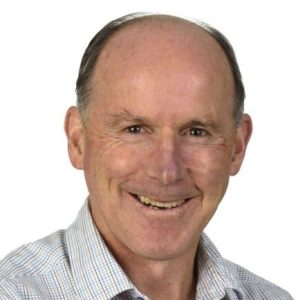
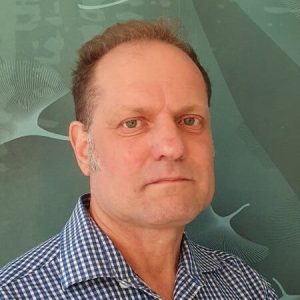
Is an occupational epidemiologist and a specialist in occupational and environmental medicine and public health medicine.
He is Professor in epidemiology and occupational medicine in the Sydney School of Public Health at the University of Sydney.
Tim’s main areas of interest include the burden of occupational disease and injury; occupational cancer and exposure to occupational carcinogens, particularly asbestos; occupational lung disease; increasing the practical application and influence of epidemiological principles and findings; and improving the communication of epidemiological principles and findings to the general public.
He leads the occupational risk factors expert working group in the Global Burden of Disease study, where his work has particularly included the burden of disease from asbestos exposure.
Tim brings valuable expertise to key ADDRI initiatives including:
Expert Consultant
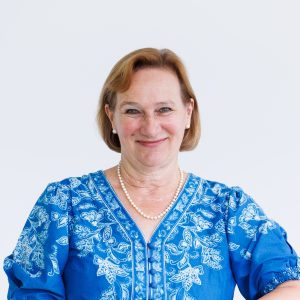
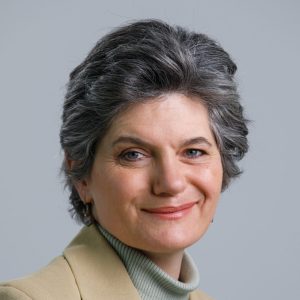
Professor Yates trained in Medicine at Cambridge University in England and completed her medical training in London. She has expertise in a broad spectrum of occupational lung diseases including coal workers pneumoconiosis, silicosis, asbestos-related disorders and occupational asthma.
She completed an MSc in Occupational & Environmental Medicine and also the AFOM (UK) & Diploma in Occupational Medicine from the London School of Hygiene & Tropical Medicine, while working for the London Pneumoconiosis Panel.
She also holds an MD from Cambridge University on the topic of asthma, including exhaled breath testing and fractional exhaled nitric oxide, based on research performed at the National Heart & Lung Institute in London. Since permanently moving to Australia, she has continued her research and clinical interest in rare lung disorders, occupational and obstructive lung diseases. She is a Senior Staff Specialist at St Vincent’s Hospital, Sydney, Conjoint Associate Professor at UNSW and Co-Chair of the Coal Mine Dust Lung Disease (CMDLD) Collaborative Group. She sits on several federal and state advisory bodies and is active in the Thoracic Society of Australia and New Zealand (TSANZ) and Royal Australasian College of Physicians (RACP). She is associated with the Black Lung Center of Excellent at Chicago, Illinois and is involved in the training program for examining medical practitioners in Queensland.
Professor Yates publishes regularly in the fields of respiratory medicine and occupational lung disease and continues an active clinical practice.
Deborah’s extensive knowledge and expertise guides ADDRI’s Silicosis research and support programs including:
Expert Consultant
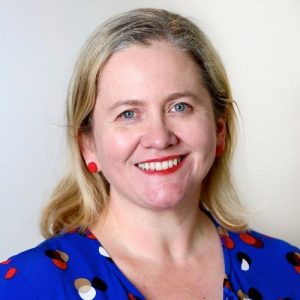
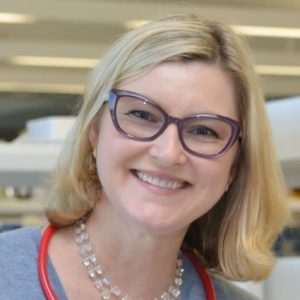
Professor Catherine Jones has been an I-MED Consultant Radiologist since 2011, working with the Queensland team since 2017. She graduated from a bachelor’s degree in mathematics and physics at the University of Queensland in 1997, and subsequently from medical school at the University of Queensland in 2001, before undertaking surgical and radiological training in the UK. She then completed a sub-specialty radiology fellowship in Vancouver Canada, in cardiothoracic radiology before returning to Australia in 2011. She has fellowship qualifications in both Australia and the UK.
Professor Jones practises general radiology with a strong interest in cardiothoracic imaging, including occupational lung disease imaging, particularly in dust-exposed workers. She advises several governments and clinical taskforces on appropriate imaging in dust disease and is Associate Professor at the School of Public and Preventive Health at Monash University.
Catherine obtained her B Reader qualification from the National Institute of Occupational Safety and Health (NIOSH) from the United States, part of the CDC network. This qualification recognises her ability in thoracic radiology in the setting of pneumoconiosis detection. The importance of pneumoconiosis surveillance, not just in the coal mining industry but in affiliated industry such as the building and civil engineering sectors, is becoming increasingly recognised.
She is also adjunct professor at the University of Sydney, curating content for medical students and clinicians. She works with medical AI companies to develop clinically useful AI tools for medical imaging interpretation, workflow, and education of doctors and other healthcare professionals. She has a long career in medical research, having published over 30 research articles, primarily in the fields of cardiac and thoracic imaging, and in developing statistical methodology in diagnostic testing, publishing several book chapters on these topics. She has also enjoyed a long-term collaborative relationship with Imperial College London.
Catherine’s expertise and experience provides invaluable support to ADDRI’s global and national programs including:
Honorary International Advisor
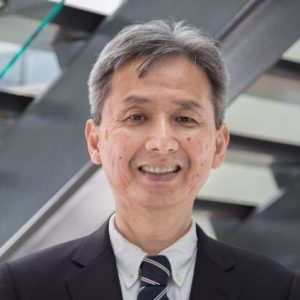
Ken Takahashi was named our Honorary International Advisor at the end of 2021 following his five year tenure as Research Director of ADDRI.
Recognised as a global expert in asbestos, Ken’s influence and knowledge ensures our international programs are of the highest quality and impact. He was appointed by the WHO Director-General to the Roster of Experts in Chemical Safety (Environmental Epidemiology) in 2012, and served as the Head of the WHO Collaborating Centre (WHO-CC) for Occupational Health at University of Occupational and Environmental Health (UOEH), Japan for more than 10 years.
As our Research Director, Ken led and built our international collaborations and projects across Asia Pacific which resulted in our designation as the world’s first WHO-CC for the Elimination of Asbestos Related Diseases, a world first.
Professor Takahashi has been an invited speaker on asbestos issues for nearly 20 years, and has been a consultant, advisor and invited speaker for the WHO to countries including the Philippines, Laos, Thailand, Viet Nam, Mongolia, Singapore, Malaysia and Japan. He has led the international cooperative activity coined the “Asian Asbestos Initiative,” funded by the Japan Society for the Promotion of Sciences, which was later recognised by the WHO as a “WHO-CC Success Story.”
At the end of 2021, Professor Takahashi was appointed Adjunct Professor within the School of Population and Global Health at UWA. With his appointment as Honorary International Advisor to ADDRI, we benefit greatly from Professor Takahashi’s exceptional expertise, commitment and passion to address and eliminate asbestos related diseases globally, especially across the Asia Pacific region.
Ken’s expertise continues to inform ADDRI’s global programs including:
Honorary Research Associate
Professor Klebe is Professor in Anatomical Pathology at Flinders University and Consultant in Surgical Pathology at Flinders Medical Centre, Adelaide.
A graduate of the Free University Berlin, she completed an MD in Germany, and postgraduate training in Pathology and a PhD at Flinders University. Her professional and academic interests over the last 18 years have been concentrated on asbestos-related disorders, especially lung cancer and malignant mesothelioma, including their diagnosis and pathogenesis.
She is an Honorary Research Associate of the Asbestos and Dust Disease Research Institute (ADDRI) and is chair of the national committee assembled by ADDRI to develop the Guidelines and recommendations for the management of pleural mesothelioma in Australia.
She was chair of the ICCR structured reporting committee for mesothelioma (2021), a member of the International Mesothelioma Panel, International Mesothelioma Interest Group and an author for the new WHO classification of lung and pleural tumours.
Professor Klebe has co-authored more than 80 peer-reviewed publications dealing with malignant mesothelioma and aspects of asbestos-related disease, in addition to chapters in textbooks, and many presentations at national and international conferences. She has supervised to completion PhD, honours and MD projects related to malignant mesothelioma, and is currently leading a clinical trial.
Professor Klebe receives consult cases for all aspects of lung disease and has reviewed more than one thousand cases of mesothelioma, in addition to lung cancers, lung cancer precursor lesions and benign asbestos-related diseases of various types (pleural plaques, diffuse pleural fibrosis, benign asbestos pleuritis with effusion, rounded atelectasis, and asbestosis).
Sonja currently leads a key strategic project for ADDRI as:
Honorary Expert Advisor
Associate Professor Tristan Rutland is a Consultant Pathologist at PathWest with subspecialty expertise in gastrointestinal, soft tissue, and thoracic pathology. His diagnostic proficiency spans a broad range of organ systems, and he plays an active role in multidisciplinary care through regular participation in tumour board meetings and interstitial lung disease discussions. His clinical practice is grounded in collaborative decision-making and a strong commitment to patient-centred outcomes.
Beyond diagnostics, Associate Professor Rutland is a passionate educator and researcher. He has received multiple international teaching awards, including the Konrad Muller RCPA Outstanding Teaching Award (2020) for his leadership in online education during the COVID-19 pandemic, and the College of American Pathologists (CAP) Meritorious Award Honoree for Resident Advocacy (2022), recognising his contributions to global pathology education. He holds academic appointments as Associate Professor at the University of Western Australia and Clinical Associate Professor at Western Sydney University.
His research focuses on colorectal carcinomas and mesothelioma, with active collaborations alongside leading institutions such as the Australian Dust Disease Research Institute. His translational research aims to bridge pathology and clinical care to improve patient outcomes. Committed to global outreach, Associate Professor Rutland is dedicated to advancing pathology and medical education in underserved regions, while maintaining active involvement in high-impact research and editorial work.
Tristan provides crucial advice and support in ADDRI’s global programs including:
Honorary Expert Advisor
Professor Matthew Peters AM is Senior Staff Specialist in the Department of Respiratory Medicine at Concord Repatriation General Hospital in Sydney. He is also Professor of Respiratory Medicine at Macquarie University in Sydney and has an academic appointment at Sydney University.
Matthew has contributed to the training of more than 50 Thoracic Physicians now in practice and has served as past President of the Thoracic Society of Australia and New Zealand.Matthew’s diverse areas of research interests include respiratory physiology, asthma, and lung cancer but also a particular focus on better care of patients with thoraxcic malignancies. His decades-long contribution to advancement of public health, through tobacco control is now extended to research and public discussions in relation to electronic cigarettes, co-chairing the Thoracic Society of Australia working party on electronic cigarettes. He serves on relevant committees and advisory panels for the NSW Ministry of Health and Cancer Institute NSW.
He chairs the Global Lung Cancer Coalition and was instrumental in the creation of the Kylie Johnson Lung Cancer Network and supported the establishment of the Australia and New Zealand Lung Cancer Nurses Forum. He was integral to the establishment of ADDRI at Concord Hospital, with founding principles of taking positive action to prevent and better treat dust-induced disease.
Matthew’s expertise and experience provides invaluable support to ADDRI’s global programs including:
Honourary Research Associate
Dr. Robert Cohen is Professor of Medicine and Director of the Occupational Lung Disease Program at Northwestern University. He is also Clinical Professor of Environmental and Occupational Health Sciences at the University of Illinois School of Public Health. He is the founder and director of the UIC Mining Education and Research (MinER) Center which has supported many research initiatives dedicated to the diagnosis and prevention of black lung, silicosis and pneumoconiosis worldwide.
His major research interests are occupational lung disease, particularly mineral dust exposed workers. He has served as a consultant to agencies of the United States government in areas of mining related health issues including the Respiratory Health Division of the National Institute of Occupational Safety and Health where he is a Senior Fellow, the US Mine Safety and Health Administration, and the Division of Coal Mine Workers Compensation at the US Department of Labor. He has been a US National Institute for Occupational Safety and Health certified B-reader since 1998 and collaborated to develop a new teaching syllabus and exam for B readers in the United States and select the 2022 standard images for the International Labour Office.
He has worked extensively internationally in the area of medical surveillance for coal mine dust and silica exposed workers. He has worked on projects in Ukraine, Colombia, Argentina, and most recently has been working with Queensland and New South Wales State Government agencies to review and improve medical surveillance in those Australian States.
Honourary Research Associate
Dr. Leonard Go is a Research Associate Professor at the University of Illinois Chicago School of Public Health and an occupational respiratory physician at Northwestern University Feinberg School of Medicine. He is the Assistant Director of the Mining Education and Research Center at UIC, and program director for the university’s Black Lung Clinic Program. His interests focus upon occupational lung disease, particularly mineral dust-related lung diseases such as silicosis, coal mine dust lung disease, and asbestosis. He has led or participated in many initiatives to help reduce the burden of occupational lung disease internationally, including consultation with regulatory bodies in Australia and abroad to improve worker health surveillance; education of physicians in the recognition of mineral dust-related lung diseases; and engaging in research analyses of epidemiologic and exposure data.
Honorary Research Associate
Dr Melvin Chin is a consultant medical oncologist at Sir Charles Gairdner Hospital in Perth, Western Australia, where he cares for people living with cancer. He has a special interest in mesothelioma and brain tumours. Dr Chin holds a PhD in computational biology from the University of Western Australia, and his research works to understand how cancers grow and how the immune system can be turned against them. His dedication to mesothelioma patients in WA was recognised with the Professor Eric G. Saint Memorial Award from the Asbestos Diseases Society of Australia.
Honorary Research Associate
Dr Stephanie Bailey is a Respiratory and Sleep Medicine physician who has completed specialist training in Respiratory Medicine and is currently finalising her dual accreditation in Sleep Medicine.
She has extensive experience across major tertiary hospitals in Sydney, including Concord, St George and St Vincent’s Hospitals, with expertise spanning occupational and environmental lung disease, interstitial lung disease (ILD), lung transplantation, thoracic oncology, sleep-disordered breathing and pulmonary procedures. Dr Bailey has worked closely within multidisciplinary teams, contributing to occupational lung disease and lung cancer meetings, while also coordinating lung nodule and ILD multidisciplinary conferences to support comprehensive, evidence-based patient care. In addition to her clinical practice, Dr Bailey has held leadership roles in coordinating interventional pulmonology and pleural procedure services, ensuring the safe and efficient delivery of complex respiratory care. Her experience managing lung transplant recipients across NSW and patients with advanced respiratory failure requiring long-term ventilatory support has further strengthened her expertise in complex disease management, continuity of care and patient advocacy.
Dr Bailey is committed to continuous improvement in respiratory healthcare and has led quality improvement initiatives focused on pleural disease management and chest drain safety. She is also a dedicated educator, having developed and delivered teaching programs for junior doctors, laboratory staff and medical students.